What Are Your Options When an Insurance Company Offers Too Little for Property Damage?
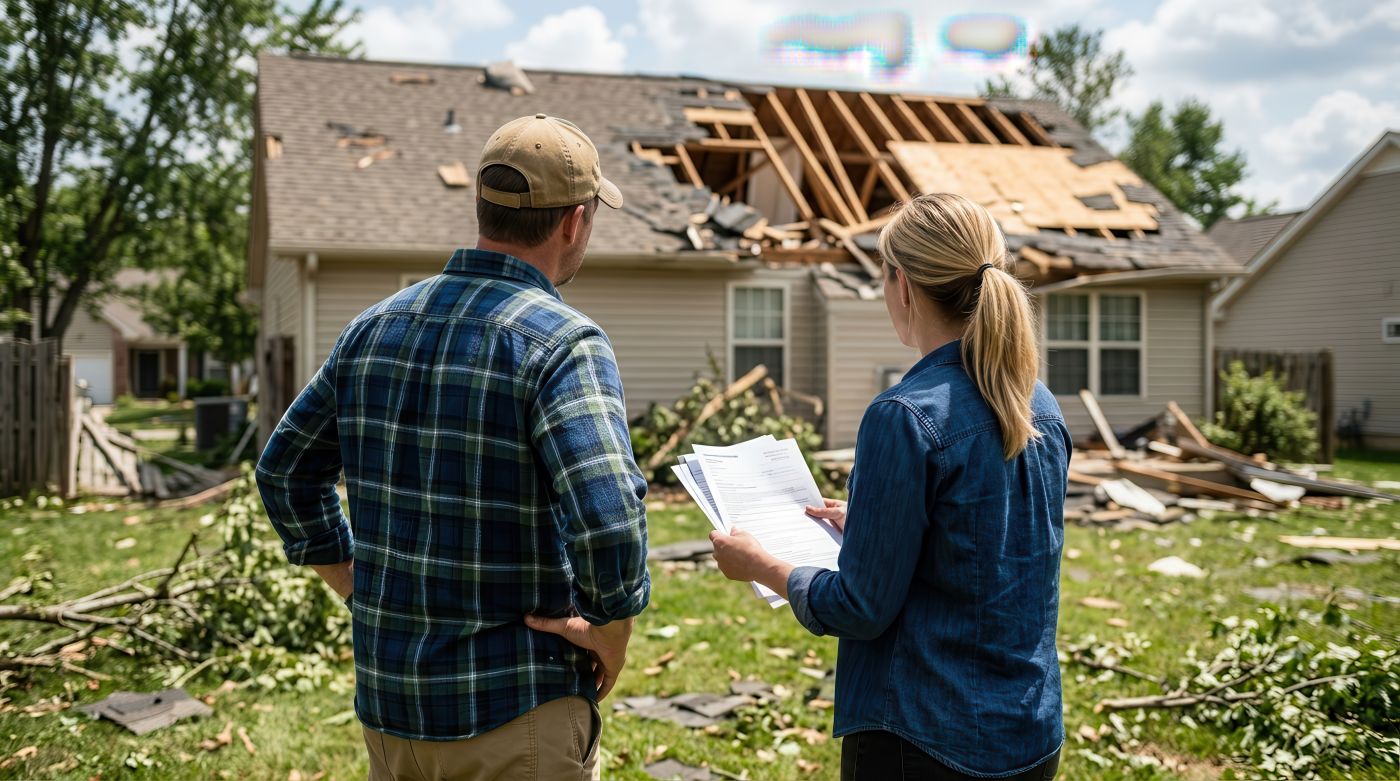
When an insurance company offers too little for property damage, you usually do not have to accept it. Depending on the policy, the cause of the damage, and who is responsible, your options may include challenging the valuation, submitting more evidence, using the policy’s appraisal process, negotiating a settlement, or pursuing legal action. The details matter, especially if the dispute involves excluded damage, repair estimates, title issues, construction defects, or a commercial property loss.
At Hunter Law Group, we work with property owners in Kansas City when a low insurance offer puts repairs, business operations, or a real estate transaction at risk.
If you are trying to decide whether to push back, document the loss more thoroughly, or escalate the dispute, it helps to understand what the insurer is actually required to pay and where these disputes often turn.
A low offer is often tied to one of a few recurring issues: the insurer disputes the scope of damage, applies depreciation, relies on a limited inspection, or takes the position that part of the loss is excluded under the policy. In some cases, the company agrees that damage occurred but undervalues labor, materials, code-upgrade costs, or the amount needed to restore the property to its prior condition.
That distinction matters. A dispute over price is different from a dispute over coverage. If the insurer says the damage is covered but offers too little, the focus is usually on proof of value. If the insurer says some or all of the damage is not covered, the dispute may turn on policy language, exclusions, causation, and the timing of the loss.
For residential and commercial property owners alike, a low offer can affect more than repairs. It may delay leasing, interfere with a sale, complicate financing, or leave a landlord and tenant arguing over who must restore the premises.
Before responding to the offer, we recommend reviewing the insurer’s written explanation carefully. The most useful documents are usually the policy itself, the adjuster’s estimate, photographs, inspection notes, contractor bids, and any letter explaining why the payment was limited.
Look for a few key points:
Whether the insurer is paying actual cash value or replacement cost
Whether depreciation was withheld
Whether the deductible was applied correctly
Whether parts of the claim were denied rather than merely undervalued
Whether the insurer says the damage was pre-existing, excluded, or caused by wear and tear
In Kansas, insurance policy terms are generally enforced as written if they are clear, which is one reason the actual wording of the policy matters so much in a property damage dispute. The Kansas Legislature publishes the state’s insurance code through the Kansas Statutes website.
In practice, this means you should not treat the insurer’s first number as the final word. It is only one position in the dispute, and sometimes it rests on incomplete information.
The strongest response to a low offer is usually detailed evidence. If the insurer’s estimate is missing rooms, materials, structural issues, water intrusion, code-related work, or business-related damage to the property, those gaps need to be documented clearly.
Useful evidence often includes:
A detailed contractor or engineer estimate
Photos and video showing the full extent of the damage
Prior maintenance records showing the property’s condition before the loss
Invoices, leases, inspection reports, or closing documents if the damage affects a transaction
Expert opinions on causation, especially when the insurer blames deterioration or faulty maintenance
This is where property owners sometimes lose leverage. If you only say the offer is too low, the insurer may simply stand by its estimate. If you show exactly what was missed and what repairs actually cost, the discussion changes.
When the dispute overlaps with ownership, disclosure, construction, or boundary issues, it may also involve broader property damage disputes rather than a simple claim adjustment problem.
Often, yes. Many underpaid claims are not truly over just because an initial payment was issued. You may be able to request reconsideration, submit supplemental documentation, or challenge the insurer’s evaluation through procedures allowed by the policy.
Some policies include an appraisal provision. Appraisal is not the same as a lawsuit. It is typically a contractual process used to resolve disputes about the amount of loss, not broader legal questions such as coverage or bad faith. Whether appraisal is available depends on the policy language and the nature of the disagreement.
If the insurer is refusing to pay because it claims the damage is excluded, late-reported, or outside the policy period, appraisal may not solve the problem. That kind of dispute often requires closer legal analysis of the policy and the facts.
Missouri also regulates unfair claims settlement practices through state insurance law, and the Missouri Department of Commerce and Insurance provides consumer information and complaint resources. Administrative complaints can be useful in some situations, but they do not replace a legal strategy when the dispute involves major property damage or contract interpretation.
Legal help becomes especially important when the insurer cites exclusions, undervalues a major loss, refuses to account for the full scope of repairs, or the claim is tied to a broader property dispute. At that stage, the issue is no longer just “What should the estimate be?” It becomes “What rights does the policy provide, what obligations apply under related real estate documents, and what is the best way to preserve leverage?”
For some property owners, that means structuring a stronger pre-suit demand with better evidence. For others, it means evaluating appraisal, mediation, or litigation. The right approach depends on the policy language, the property records, the cause of loss, and whether other parties such as sellers, contractors, tenants, landlords, or title insurers may share responsibility.
Our award-winning legal team provides confident representation and regional influence in real estate disputes throughout the Kansas City metro area. At Hunter Law Group, we handle matters involving commercial landlord-tenant disputes, property damage disputes, seller disclosure issues, construction disputes, tax appeal disputes, foreclosure disputes, easement and boundary disputes, eminent domain defense, and title insurance claims. Whether the property is residential or commercial, we work to protect your interests through negotiation, mediation, or litigation when necessary.
We represent clients in Kansas City, Kansas, and Kansas City, Missouri, as well as all counties in the Kansas City metro area, including Johnson County, Wyandotte County, Miami County, and Franklin County.
If your insurance company’s offer doesn't reflect the real cost of the damage, we can review the policy, the property issues behind the claim, and your next steps.
To learn more about our background and legal services, contact Hunter Law Group today and set up a consultation.